Ask about the job, not about AI.
At an industry conference in Bengaluru a room of mobility leaders described AI agents for their own work in one session, by answering four plain questions. What that showed, and what it did not.
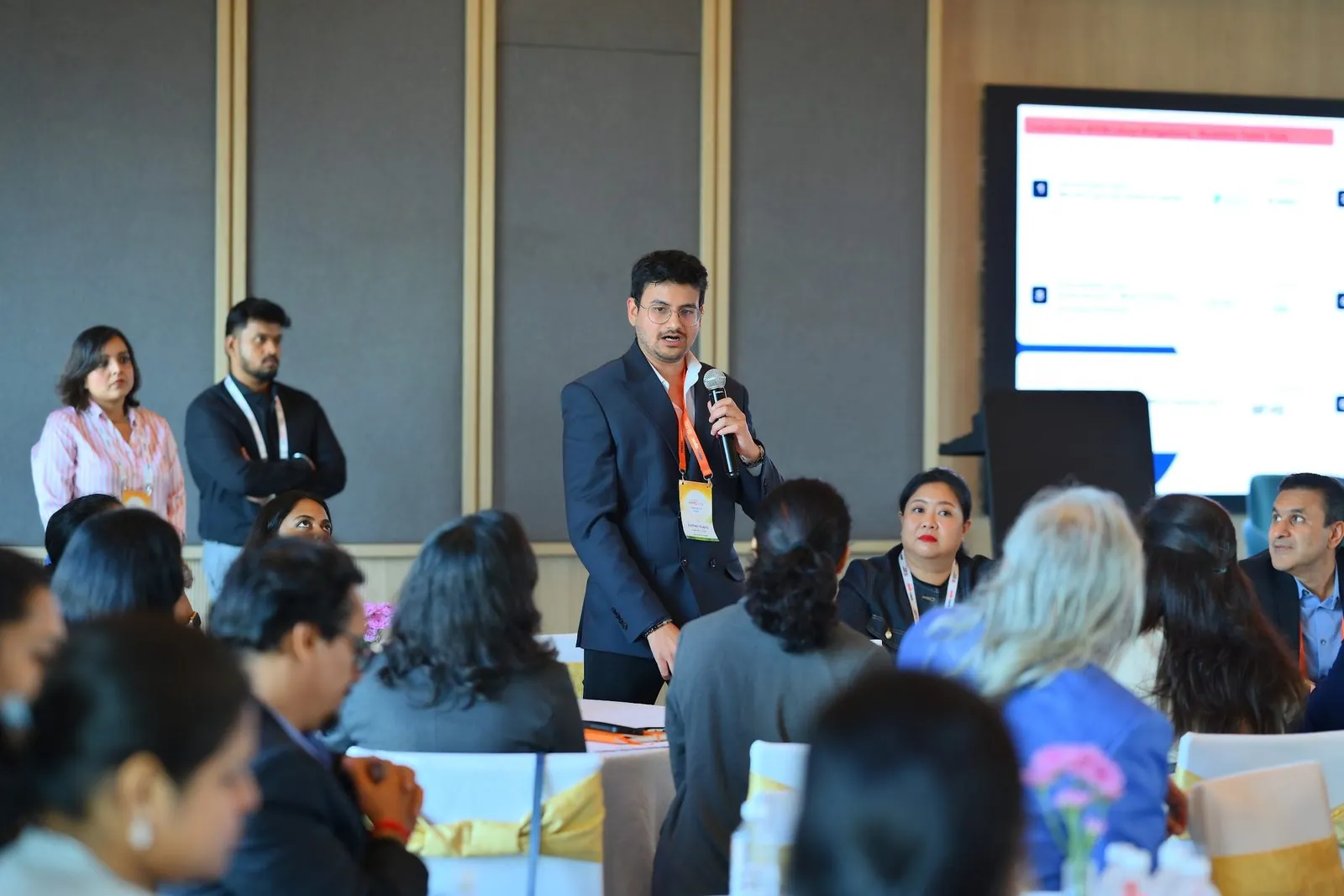
On 18 September 2026 our founder led a workshop at an industry conference in Bengaluru. Each person in the room could describe an AI agent of their own, for a job in their own firm, with their name on it. Nobody watched a demo. Each person wrote down their own job.
The method was the Four Questions. They are the whole trick, so here they are.
- 1When does it start?An email arrives, a form is filled, a file lands, it is Monday morning.
- 2What does it do?In your own words, about your own work.
- 3Who says yes?Your person, before anything leaves. Or nobody, under a limit you set.
- 4Where does the result go?Mail, WhatsApp, a sheet, the system you already use.
Answer those four and you have described an agent clearly enough to build it. None of them is about AI. Every one is about the job.
What the room showed
Each agent began with a job the person already does. In a mobility firm that means an enquiry, a quote, a document chase, an update to a family, a monthly report for a corporate client: the things that fill the day and run late. Once the question was about their own Tuesday rather than about technology, almost nobody needed it explained, and the room wrote down agent after agent described that way.
So the first lesson. The fear that "our people don't know how to use AI" is real, and it can be solved in an afternoon, as long as nobody is asked to learn AI. Ask them to describe their work instead. The knowledge was in the room already, but nobody had asked for it in a shape a machine could use.
What it did not show
The second lesson matters more, and it is less flattering. An agent described in a minute is not running anything. Each description in the room was good enough to build from, and none of them was reading a real inbox that evening.
The distance between a described agent and a running one is the work:
- connecting it to the firm's own files and systems
- writing in the rules, so the odd old exception is handled
- testing it on the firm's past jobs
- running it beside the team, with a person saying yes
- watching it months later, when the model changes
That is the building, and the care every month after. Anyone who tells you a room's descriptions were working systems is selling something. We would rather say it than have you find out.
Where the method lives now
We put the same four questions on our own site. Anyone can make an agent in a minute and send it to us as a first message. It is a far better start than "we are interested in AI", because it already says what the job is, who approves it and where the result goes. We can reply about the business instead of asking questions.
For a company or an association, we run the workshop with your own people and your own files in the room, so you can go the whole distance.
Try it on your team
If you want to know whether your people can use AI, do not ask them. Ask them the four questions about the job that is always late, and see how long they take to answer. The rest, between a described agent and a running one, is work someone has to do properly and then stay for. That part is ours.